Summer brings longer days, warmer weather, family visits, and more time outdoors. For many families, this season feels joyful and refreshing.
But for aging loved ones, summer heat can also create serious safety concerns.
Older adults may not adjust to heat as quickly as younger adults. They may also feel less thirsty, even when their body needs fluids. When you add medications, chronic conditions, limited mobility, memory changes, or living alone, the risk becomes even greater.
At Mothers Helping Hands (MHH) Homecare, we believe preparation is one of the best forms of care. Families should not have to wait for a crisis before putting support in place. With the right routines, check-ins, and in-home assistance, aging loved ones can feel safer, more comfortable, and more supported during the summer months.
Why Summer Safety Matters for Aging Adults
Heat can affect seniors in different ways. Some may become tired more quickly. Others may feel dizzy, weak, confused, or overwhelmed. For loved ones who already need daily support, even a small change in temperature or routine can make a big difference.
Family caregivers often carry the responsibility of checking in, reminding loved ones to drink water, making sure the home is cool, and watching for changes in behavior or comfort. That can be a lot to manage, especially when caregivers are also balancing work, children, appointments, and other family responsibilities.
This is where homecare support becomes valuable.
Mothers Helping Hands (MHH) Homecare helps families create a safer daily rhythm through compassionate in-home support, companionship, observation, and practical assistance.
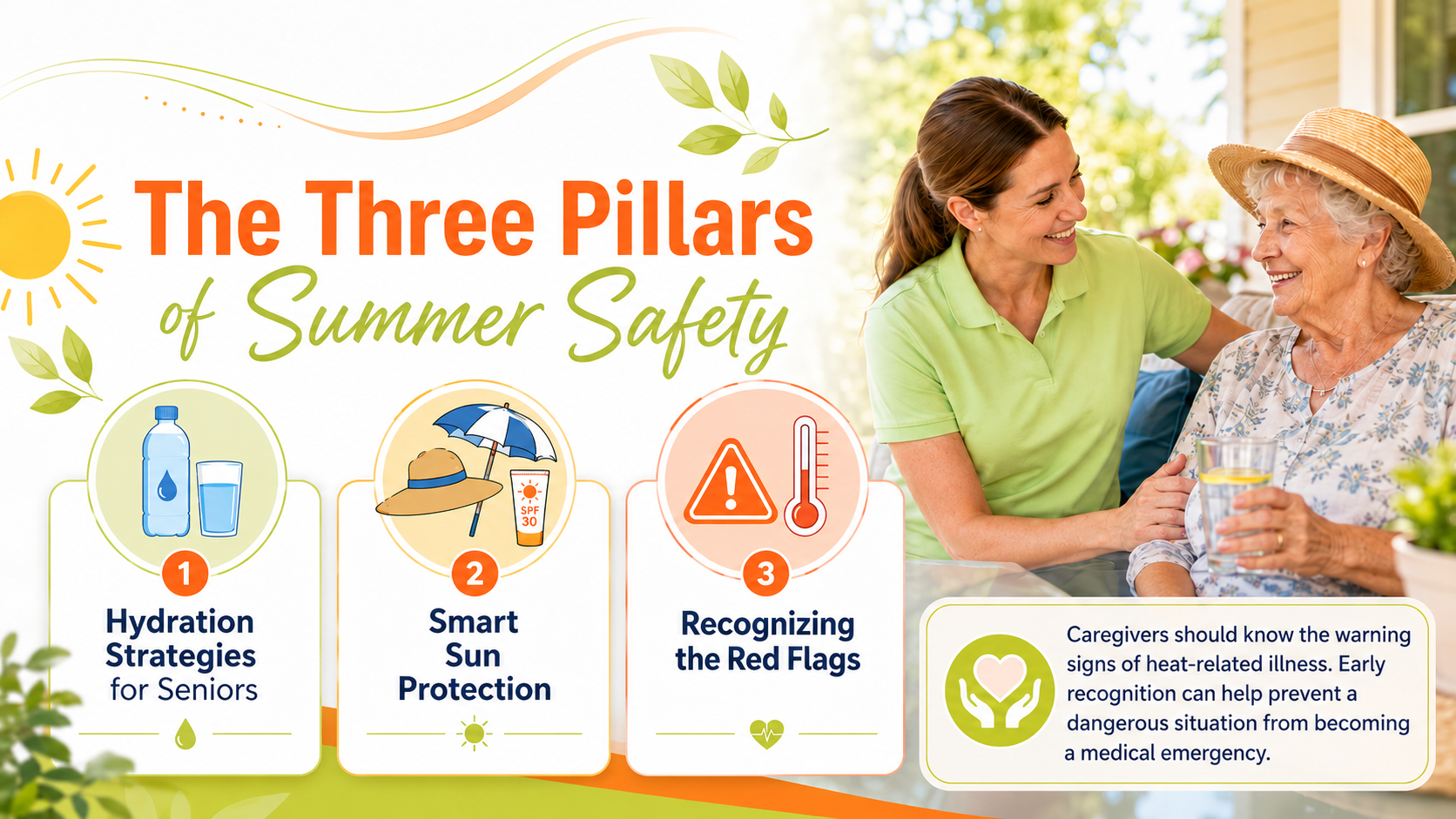
The Three Pillars of Summer Safety
1. Hydration Support
Hydration is one of the most important parts of summer care.
Many older adults do not always feel thirsty, even when they need fluids. Some may forget to drink water. Others may avoid fluids because they do not want to use the restroom often.
That is why hydration should become part of the daily routine.
Helpful strategies include:
- Offering water at regular times throughout the day
- Keeping a water bottle, cup, or pitcher nearby
- Adding water-rich foods such as watermelon, cucumbers, oranges, grapes, berries, and soups
- Flavoring water naturally with lemon, cucumber, mint, or berries
- Using a simple hydration log
- Watching for signs such as dry mouth, dizziness, fatigue, confusion, or reduced urination
For families using Mothers Helping Hands (MHH) Homecare, caregivers can help provide gentle reminders, observe changes, and support the daily routines that help loved ones stay comfortable.
If your loved one has fluid restrictions or certain medical conditions, always follow the guidance of their healthcare provider.
2. Smart Sun and Heat Protection
Sun protection is not only for outdoor events.
Older adults may be exposed to heat while sitting near sunny windows, walking to the mailbox, waiting for transportation, or spending time on a porch or patio.
Simple steps can help reduce risk:
- Choose lightweight, loose-fitting clothing
- Use light-colored fabrics
- Encourage a wide-brimmed hat when outdoors
- Apply sunscreen before outdoor activity
- Use sunglasses with UV protection
- Schedule errands and outdoor activities earlier in the morning or later in the evening
Whenever possible, avoid outdoor activity during the hottest part of the day, especially between 10 AM and 4 PM.
Inside the home, caregivers and family members should check that the air conditioning is working, fans are safely placed, blinds or curtains are used to block direct sunlight, and the loved one has access to a cool space.
Mothers Helping Hands (MHH) Homecare can help families by providing regular in-home support and monitoring during the hotter months, especially for seniors who live alone or need help maintaining a safe daily environment.
3. Recognizing the Red Flags
Caregivers should know when heat may be affecting an aging loved one.
Heat-related symptoms can show up physically, emotionally, or behaviorally. A loved one may not always say, “I feel too hot.” Instead, they may seem confused, weak, dizzy, irritable, tired, or not like themselves.
Possible signs of heat exhaustion may include:
- Heavy sweating
- Cool, pale, or clammy skin
- Dizziness or lightheadedness
- Weakness or tiredness
- Headache
- Nausea or vomiting
- Muscle cramps
- Fast or weak pulse
- Feeling faint
If these symptoms appear, move your loved one to a cooler place right away. Encourage rest, loosen tight clothing, offer small sips of water if they are alert and able to drink, and use cool clothes to help them cool down.
Heat stroke is more serious and requires immediate emergency help.
Possible signs may include:
- Confusion
- Slurred speech
- Loss of consciousness
- Hot, red, dry, or damp skin
- Very high body temperature
- Rapid heartbeat
- Seizures
- Severe weakness or inability to respond normally
If you suspect heat stroke, call emergency services immediately. Move the person to a cooler area and begin cooling them while waiting for help.
When in doubt, act quickly.
How Mothers Helping Hands (MHH) Homecare Supports Families During the Summer
Summer safety is not just about one reminder or one checklist. It is about consistent care.
Mothers Helping Hands (MHH) Homecare supports families by helping aging loved ones with daily routines, companionship, comfort checks, and non-medical in-home assistance. This can be especially helpful for families who cannot be present throughout the day but still want their loved one to feel watched over and supported.
Support may include:
- Companionship and regular check-ins
- Hydration reminders
- Meal and snack support
- Light household support to maintain comfort
- Observation of changes in mood, energy, or behavior
- Assistance with safe daily routines
- Support during appointments or errands
- Communication with family members when concerns arise
For families, this creates peace of mind. For aging loved ones, it creates a sense of safety, dignity, and connection.
Actionable Caregiver Resource: The Summer Safety Fridge Checklist
A simple checklist can help everyone stay on the same page.
Mothers Helping Hands (MHH) Homecare recommends placing a Summer Safety Checklist on the refrigerator or another visible area in the home. This makes it easier for family members, caregivers, and visiting support partners to follow the same routine.
Suggested checklist items include:
- Check hydration log
- Offer water or water-rich foods
- Apply sunscreen before outdoor activity
- Verify air conditioning is working
- Close blinds during peak heat
- Review medication schedule
- Check for dizziness, confusion, or weakness
- Keep emergency contacts visible
- Avoid outdoor activity from 10 AM to 4 PM
- Confirm loved one has access to a cool space
This small tool can make a big difference, especially when more than one person is helping with care.
Small Changes Can Make a Big Difference
Caring for an aging loved one during the summer does not have to feel overwhelming.
Small changes in routine can help reduce risk and increase comfort. A glass of water nearby, a cooler room, a morning errand instead of an afternoon one, or a daily check-in can all help protect your loved one.
At Mothers Helping Hands (MHH) Homecare, we understand that families need more than reminders. They need trusted support, compassionate caregivers, and practical systems that make care feel manageable.
Your loved one deserves to feel safe, supported, and seen, especially during seasons when extra care is needed.
Is Your Loved One Prepared for the Heat?
If you are caring for an aging parent, senior family member, or loved one who needs extra support this summer, Mothers Helping Hands (MHH) Homecare is here to help.
Contact Mothers Helping Hands (MHH) Homecare today to learn more about in-home support, companionship, monitoring, and care services for aging adults.
Schedule a consultation today or download our Summer Safety Checklist here:
Because preparation is care, and no family should have to navigate caregiving alone.